
02 · Hardscape Construction
Stone, pavers and walls, built on a base that keeps them flat
Retaining walls, patios, walkways, steps, driveways and entries, in pavers, natural stone, brick or concrete.
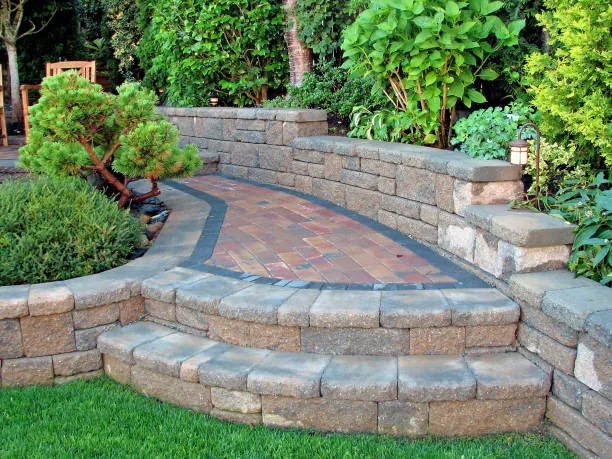
01What we build
The hard parts of a yard, in the materials that last
Everything here goes on excavated, compacted ground; the base is the part you never see and the part that decides how long it lasts.
-
Retaining walls
Block and stone walls that hold back a slope, level a yard or carve out a flat spot for a patio, with drainage gravel and a pipe behind them.
-
Patios
Paver, flagstone, brick or concrete patios set to drain away from the house.
-
Walkways and paths
From the driveway to the front door, around the side of the house, or out to the garden.
-
Steps
Block and stone steps up a grade, built into the wall or the slope with even risers.
-
Driveways and entries
Paver driveways, aprons and entry courts that can carry a car and still look like part of the landscape.
02Under the surface
Why some walls lean and some patios sink
Almost every failed hardscape in a Middle Tennessee yard comes down to water or the base. A paver patio laid on a thin bed of sand over clay will heave and dip within a few winters; one laid on several inches of compacted crushed stone stays flat. A wall without drainage behind it has to hold back wet clay, which is far heavier than dry ground, and that is when walls lean.
So the job is mostly the part you never see: digging out to firm soil, laying and compacting the gravel base in lifts, setting the first course of block below grade, and running a perforated pipe in clean stone behind any wall so water has a way out.
Material is a matter of look and budget. Pavers come in the most colors and patterns and can be lifted and reset if something settles. Natural stone is the most varied and the most expensive. Brick suits older houses. Poured concrete is the lowest first cost.
Height changes the rules. Walls taller than about four feet generally need an engineered design and a permit, so a tall slope is often handled with two shorter terraced walls with planting between them.
Had a great experience with Wilhelm landscapes! Hunter returned a prompt quote and confirmed our hardscaping requirements for a retaining wall. We had three quotes and felt comfortable with the price and detail Hunter shared and ultimately went with Wilhelm. Our end result is perfect, communication during the work was excellent and his crew was very respectful of our property. Will return to Hunter for future work!
04Answers
Walls, patios and pavers
How much does a retaining wall cost?
A wall is priced from its height, its length, the block or stone, the drainage behind it and how a machine gets to it, so the number comes after a site visit. The visit and the written estimate are free.
How long does a retaining wall last?
A segmental block or stone wall on a compacted base, with drainage gravel and a pipe behind it, should stand for decades. Most early failures come from water trapped behind the wall, not from the block itself.
Do I need a permit for a retaining wall in Tennessee?
Usually not for a short garden wall, but walls taller than about four feet generally need an engineered design and a building permit. Brentwood, Franklin and Metro Nashville each set the exact rule, so check with the city before you build.
Pavers or poured concrete for a walkway or driveway?
Pavers cost more up front, but a cracked or sunken section can be lifted and reset, and they come in far more colors and patterns. Poured concrete is the lower first cost and will crack somewhere over time, which is why it is cut with control joints.
How many days does a retaining wall job take?
Most hardscape jobs, walls included, are built in one to three weeks once work begins. Height, length and how much soil has to come out are what set the time.
What materials do you build with?
Pavers, natural stone, brick and concrete. Which one suits a job depends on the look of the house, the budget, and what the surface has to carry.