
05 · Drainage Solutions
Standing water has a source. Find it, then move it.
French and trench drains, buried downspout lines, regrading and dry creek beds, for soggy lawns, washed-out beds and water against the house.
01The fixes
Four ways to move water, and when each one fits
-
French drains
Perforated pipe in a gravel trench that collects water from wet soil and carries it to an outlet. For ground that stays soggy below the surface.
-
Trench and channel drains
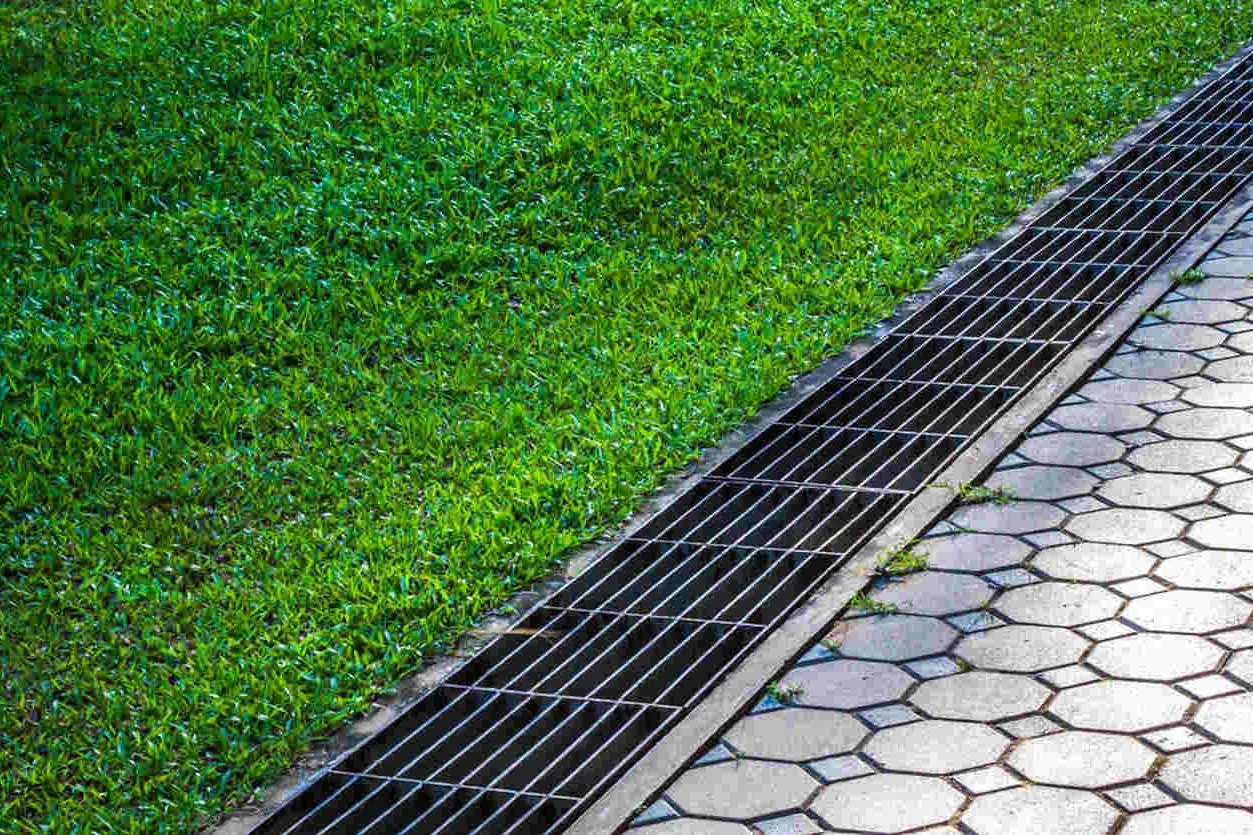
A grated channel across a driveway, patio or walk that catches sheet water before it reaches the garage or the door.
-
Downspout and gutter lines
Solid pipe buried from each downspout to daylight or a pop-up emitter, so roof water stops landing at the foundation.
-
Regrading and dry creek beds
Reshaping the surface so water runs where it should, and a stone-lined channel to carry heavy runoff across the yard in plain sight.
02Diagnosis first
Where the water is coming from
A drain in the wrong place moves very little water, so the work starts with watching where it comes from. In most Middle Tennessee yards it is one of four things: roof water dumped at the corners of the house, a grade that tilts toward the foundation, a low spot with no way out, or clay soil that takes hours to soak up a hard rain.
Roof water is the cheapest win. An inch of rain on a 2,000-square-foot roof is more than 1,200 gallons, and a splash block puts all of it next to the foundation. Buried lines that carry it away often fix a wet crawl space or a soggy side yard without anything else.
Surface water that sheets across the yard is a grading problem first, and sometimes a swale or a dry creek bed is the right answer because it moves a lot of water and looks like part of the landscape. Water that sits in the soil after the surface dries is what a French drain is for.
Every system needs a legal, working outlet: daylight downhill, a pop-up emitter, or a connection the city allows. Sending it onto a neighbor’s lot only moves the problem next door.
03Answers
Drainage questions
How much does a French drain cost?
It is priced by the length of the run, how deep it goes, where the water can be let out, and what is in the way, such as roots, rock or utility lines. The site visit and the written estimate are free.
What is the difference between a French drain and a trench drain?
A French drain is a perforated pipe buried in gravel that collects water from the soil below the surface. A trench drain is an open channel with a grate that catches water running across a hard surface such as a driveway or patio.
Why does my yard stay soggy after it rains?
Usually it is a mix of heavy clay soil that drains slowly, low spots with nowhere to send the water, and downspouts emptying onto the lawn. Finding which of those is doing it comes before choosing a fix.
Where should my downspouts drain?
Well away from the foundation, at least several feet and farther on a flat lot, into a buried pipe that carries the water to daylight or to a pop-up emitter in the lawn. A splash block at the corner of the house is not enough in a heavy rain.
Does a dry creek bed actually fix drainage?
It does when it is dug and sloped to carry surface water to an outlet; a row of rocks laid on flat ground only decorates the puddle. Built right, it handles the runoff and reads as part of the planting.